
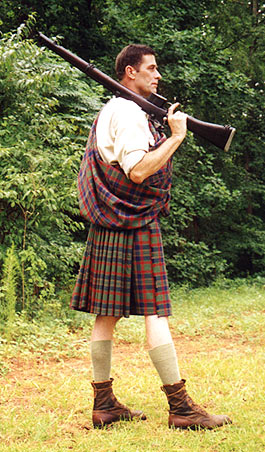
Kilts are widely available in specialized stores, with prices ranging from £25 to several hundred pounds. However, these are pre-made kilts, which some might consider as taking shortcuts. Even the more expensive kilts that Scots purchase for various ceremonial events are typically sewn small kilts.
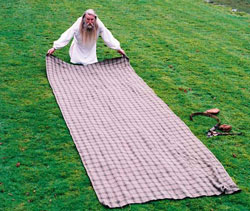
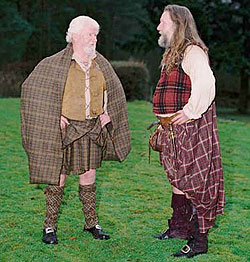
The genuine kilt, the kind worn by Scots in the 17th and 18th centuries while engaging in activities such as illicit whiskey distillation and battles against the English, was traditionally crafted at home.
To authentically resemble a true Highlander, you’ll need the following:
- A checkered plaid made from sheep’s wool, measuring 1.5×6 meters.
- A belt.
- A long homespun shirt, often referred to as a Jacobite Shirt.
- Long woolen socks.
- Comfortable footwear suitable for long walks in the mountains and battles.
Now, let’s get started
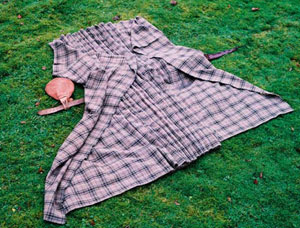
Put on the shirt and head out to an open field, where you’ll lay the grandmother’s plaid on the ground.
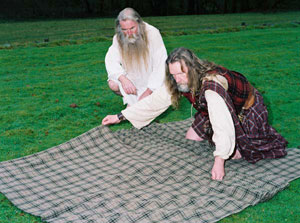
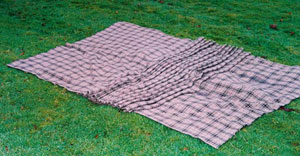
The next step is folding the plaid, which is the most time-consuming part of making a kilt. Measure a distance from one side, equivalent to the length of your outstretched arm, and begin creating folds until the other side matches the same pattern.
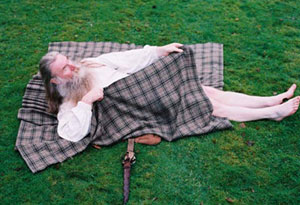
Now, take the belt and thread it beneath the plaid.
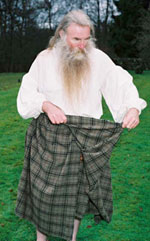
Lie down and wrap the plaid around yourself, securing it with the belt.
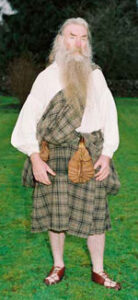
Here comes the creative part of the process. Half of the plaid will form a skirt, while the other half drapes over your waist, allowing you to style it as you wish. You can wear it over your shoulder, use it as a cape, or simply let it hang, depending on your preference and the weather conditions.
As for footwear, you have flexibility in choosing comfortable shoes suitable for long walks and potentially challenging terrains. Accessories like bags, waistcoats, and knives are optional and entirely up to your personal preference.
That’s it! The process is straightforward and practical, giving you the authentic look and feel of a true Highlander.