
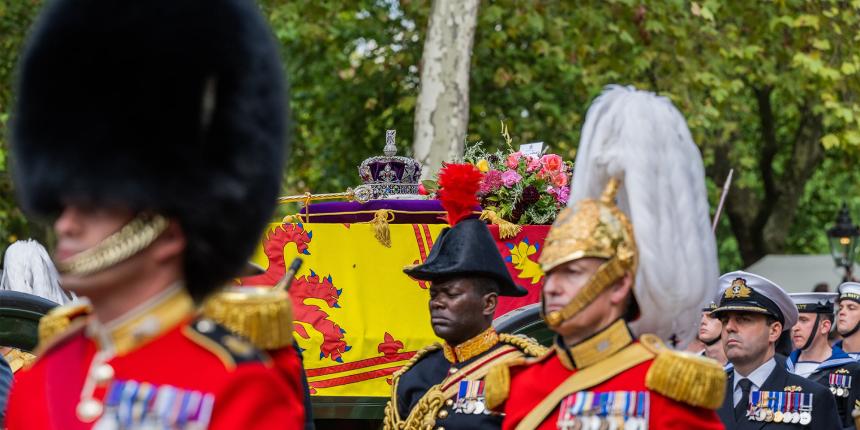
In the heart of London, beneath the somber skies that seemed to mourn the loss of a beloved monarch, the world came together to bid farewell to Queen Elizabeth II in a historic and poignant funeral ceremony. The passing of the longest-reigning monarch in British history marked the end of an era and the beginning of a new chapter for the United Kingdom and the Commonwealth.
A Nation in Mourning
The funeral of Queen Elizabeth was a solemn and dignified affair, reflecting the deep respect and admiration the world held for the Queen. The funeral procession began at Buckingham Palace, where the Queen’s body had been lying in state for several days, allowing mourners from all walks of life to pay their final respects.
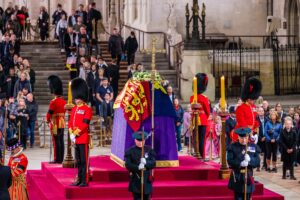
Thousands of mourners lined the streets of London, many draped in black, as the ceremonial military band played mournful tunes. The sight of the Union Jack flying at half-mast across the country encapsulated the collective grief felt by the nation.
A Grand Procession
The funeral procession was a grand and elaborate affair, befitting a monarch of Queen Elizabeth’s stature. It was led by a regiment of the Queen’s Guard, their stoic demeanor mirroring the solemnity of the occasion. Following closely behind was a horse-drawn carriage bearing the Queen’s casket, adorned with white lilies, her favorite flowers.
The carriage was flanked by members of the royal family, with Prince Charles, the Queen’s eldest son and heir to the throne, walking beside it. Other senior members of the royal family, including Prince William and Prince Harry, walked behind the carriage, their faces etched with sorrow.
A Multitude of Dignitaries
The funeral was attended by dignitaries and heads of state from around the world, a testament to the Queen’s global influence and diplomatic prowess. Political leaders, including presidents and prime ministers, gathered to pay their respects and honor the Queen’s legacy of leadership and service.
A Solemn Service
The funeral service took place at Westminster Abbey, a hallowed place that had witnessed many significant moments in British history. Inside the abbey, the atmosphere was one of reverence and reflection. Eulogies delivered by family members and close friends painted a vivid picture of Queen Elizabeth’s life, her dedication to her role as monarch, and her unwavering commitment to her people.
The Archbishop of Canterbury, the spiritual leader of the Church of England, conducted the service, offering prayers for the Queen’s soul and words of comfort to the grieving nation. Hymns sung by the choir filled the sacred space with both melancholy and hope.
A Final Farewell
As the funeral procession made its way to St. George’s Chapel in Windsor Castle, where the Queen would be laid to rest beside her beloved husband, Prince Philip, the streets were lined with well-wishers who had come to bid their final farewell. The tolling of bells resonated across the country, a poignant reminder of the end of an era.
The burial itself was a private and intimate affair, attended only by close family members. The Queen’s final resting place was a place of serenity and reflection, nestled within the grounds of Windsor Castle, a place she had cherished throughout her life.
A Legacy Remembered
Queen Elizabeth II’s funeral was a momentous and emotionally charged event that captured the essence of her reign—a reign marked by unwavering dedication, resilience, and a deep sense of duty. Her legacy will endure through the generations, a testament to the enduring power of the British monarchy and the profound impact of a remarkable woman who served as queen for over seven decades.
As the world watched, mourned, and celebrated her life, it was evident that Queen Elizabeth II had left an indelible mark on the hearts of her subjects and the pages of history. The Queen’s passing marked the end of an era, but her memory and the values she embodied will continue to inspire and guide the United Kingdom and the Commonwealth for years to come.